Highland Cattle: A Beginner-Friendly Overview
Highland cattle are one of the oldest and most recognizable cattle breeds in the world, known for their long shaggy coats, sweeping horns, and hardy nature. Originally from the rugged Scottish Highlands, these cattle are built to thrive in harsh conditions and have become a favorite among small farmers, homesteaders, and hobby breeders alike.
With their striking appearance and calm disposition, Highlands are as enjoyable to look at as they are practical to raise.
Why Choose Highland Cattle?
Whether you're starting a small farm, expanding your herd, or simply looking for a unique and reliable breed, Highland cattle offer unmatched advantages:
Extremely hardy
Thrives in harsh weather conditions
Low maintenance
Requires less input than many modern breeds
Efficient grazers
Do well on pasture and rough forage
Calm, manageable temperament
Premium-quality beef
With excellent flavor
Striking appearance
Adds value and interest to your farm
Highlands are not just cattle—they’re an investment in sustainability, quality, and long-term value.
Highland Cattle: History of the Breed
Highland cattle originated in the Scottish Highlands and Western Isles, where they were developed over centuries to survive in some of the toughest conditions in Europe. Traditionally, there were two types: the smaller, hardier island cattle and the slightly larger mainland cattle. Over time, these types were combined into the modern Highland breed we know today. Their thick coats, strong maternal instincts, and efficient grazing habits allowed them to flourish in rocky, windswept environments where other livestock would struggle.
Breed Characteristics & Appearance
Highlands are instantly recognizable and have several defining traits:
Size
- Smaller than many commercial beef breeds, but still sturdy and well-built
- Cows typically range from 900–1,200 lbs
- Bulls can range from 1,500–1,800 lbs
Conformation
- Strong, compact body
- Deep chest and well-sprung ribs
- Shorter legs relative to body size
- Naturally thick bone structure
Coat
- Long, shaggy double coat consisting of a soft undercoat and coarse outer hair
- Provides insulation against cold, wind, and rain
Color (Common colors include)
- Red (most iconic)
- Black
- Yellow
- Dun
- Brindle
- Silver (rare)
Horns
- Both bulls and cows grow horns
- Bulls: thicker, more forward-facing
- Cows: longer, often sweeping upward
Breeding & Calving
Highland cattle are known for ease of calving and strong maternal instincts:
- Gestation: approximately 283 days
- Cows often calve unassisted
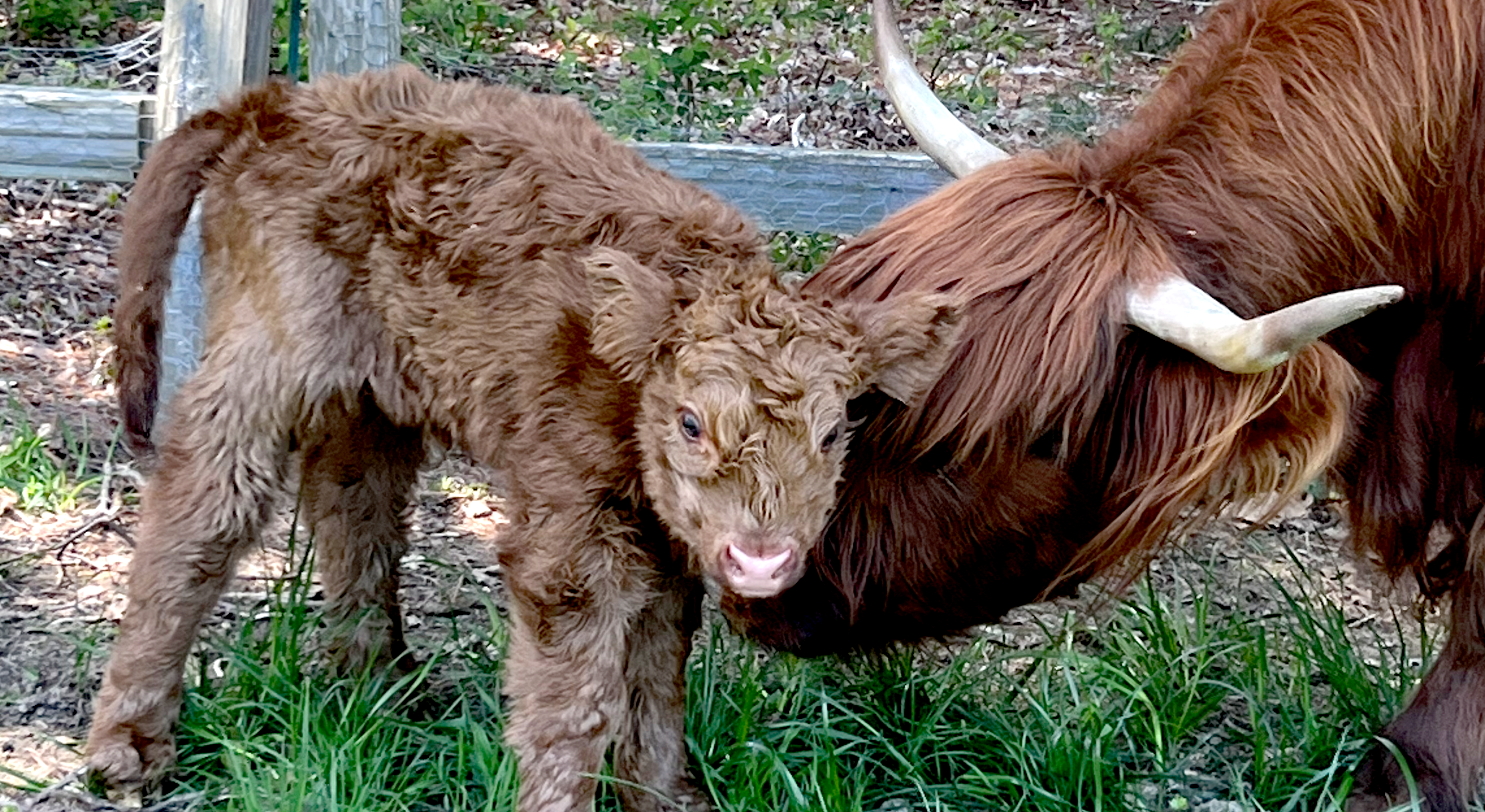
- Calves are small at birth but vigorous
- Excellent mothering ability and protective instincts
They also tend to have a long productive lifespan compared to many breeds.
Temperament
Highland cattle are generally calm and easygoing, especially when raised with regular human interaction. They are intelligent, curious, and tend to be less high-strung than some commercial breeds.
However, like all horned cattle, they require respectful handling and awareness of personal space.
Land & Housing Needs
One of the biggest advantages of Highlands is their adaptability:
- Can thrive on rough, hilly, or less-productive land
- Require less shelter than many breeds due to their thick coats
- Natural windbreaks or simple structures are usually sufficient
- Access to clean water is essential
They are particularly well-suited for colder climates but can adapt to warmer regions with proper shade.
Feeding
Highlands are extremely efficient grazers:
- Primarily pasture-based diet
- Can utilize coarse grasses and brush that other breeds may ignore
- Hay supplementation during winter or drought
- Minimal grain required unless finishing for beef
Their efficiency helps reduce overall feed costs.
Health & Maintenance
Highlands are known for their resilience and low-maintenance care:
- Naturally resistant to many environmental stressors
- Fewer health issues compared to heavily commercial breeds
- Routine vaccinations and parasite management still recommended
- Annual Hoof trimming (less frequent if on rough terrain)
- Brushing of coat, especially during spring months when shedding winter coat